Clear Aligner Case Selection: What General Dentists Should Know
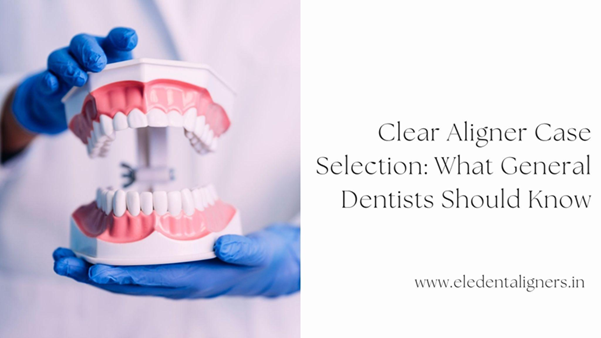
Clear aligner therapy has become an increasingly common part of everyday dental practice. Patients often ask about aligners for their aesthetic appeal, comfort, and removability, and general dentists are frequently the first point of contact for these inquiries. However, successful clear aligner treatment depends less on demand and more on careful case selection. Understanding which cases are suitable—and which are not—is essential to achieving predictable, stable outcomes.
For general dentists, clear aligners can be a valuable addition to treatment offerings when used within appropriate clinical boundaries. This blog outlines the key principles of clear aligner case selection, focusing on diagnosis, limitations, and decision-making rather than system-specific promotion.
Why Case Selection Matters in Clear Aligner Therapy
Clear aligners are not a one-size-fits-all solution. While digital planning and modern materials have expanded their capabilities, aligners still rely on controlled biomechanics, patient compliance, and realistic treatment goals. Choosing the right clear aligner provider is only one part of the equation; selecting the right case is what ultimately determines success.
Poor case selection can lead to prolonged treatment, excessive refinements, compromised occlusion, or patient dissatisfaction. For general dentists, recognizing clinical red flags early helps prevent avoidable complications and supports better collaboration with orthodontic specialists when needed.
Start With a Comprehensive Diagnosis
Every clear aligner case should begin with a thorough diagnostic process. This includes clinical examination, intraoral and extraoral photographs, digital scans or impressions, and appropriate radiographs. Evaluating skeletal pattern, facial profile, periodontal health, and occlusal relationships is critical before considering aligner therapy.
Mild to moderate dental malocclusions are generally more predictable with aligners. However, skeletal discrepancies, severe crowding, or compromised periodontal support may require alternative approaches or specialist referral. Clear aligners can only move teeth within biological limits, and no digital setup can override those constraints.
Understanding Case Complexity
General dentists should be comfortable managing straightforward cases while recognizing when complexity increases risk. Mild spacing, minor crowding, rotations of anterior teeth, and relapse cases after previous orthodontic treatment are often well suited for aligners.
As complexity increases—such as deep bites, open bites, significant transverse discrepancies, or cases requiring extractions—the biomechanical demands also increase. In these situations, aligner therapy may still be possible, but only with careful planning, attachments, and close monitoring. Awareness of how teeth aligners in India are commonly used across different practice settings can help dentists align expectations with clinical reality.
Patient Factors That Influence Case Selection
Even an ideal clinical case can fail if patient-related factors are overlooked. Clear aligners depend heavily on compliance, typically requiring 20–22 hours of wear per day. Patients with inconsistent routines, unrealistic expectations, or low motivation may struggle to achieve desired outcomes.
General dentists should assess lifestyle, oral hygiene habits, and the patient’s understanding of treatment responsibilities. Clear communication about limitations, timelines, and the possibility of refinements is essential. Case selection is not only about teeth—it is also about the person wearing the aligners.
Biomechanical Considerations General Dentists Should Know
Aligners apply force differently than fixed appliances. Certain movements—such as bodily movement, extrusion, or large rotations—are more challenging to achieve predictably. Attachments, staging, and aligner sequencing play a major role in controlling these movements.
General dentists should understand that avoiding necessary steps, such as attachments or interproximal reduction, can compromise outcomes. Clear aligners work best when biomechanics are respected rather than simplified for convenience.
Periodontal and Restorative Considerations
Periodontal health is a critical factor in clear aligner case selection. Patients with active periodontal disease, significant bone loss, or mobility require stabilization before orthodontic movement is considered. Aligners may be gentler in force application, but they still exert pressure that can worsen underlying conditions if not managed properly.
Restorative factors such as crowns, veneers, and implants must also be evaluated. Teeth with extensive restorations may respond differently to aligner forces, and implants, of course, do not move at all. These factors should be incorporated into treatment planning from the outset.
When to Collaborate or Refer
One of the most important skills for general dentists is knowing when to seek collaboration or refer a case. Complex malocclusions, skeletal discrepancies, or cases requiring significant occlusal correction often benefit from orthodontist involvement.
Referral is not a limitation—it is a professional strength. Clear aligner therapy works best when each clinician operates within their area of expertise. Collaborative care leads to better outcomes, fewer complications, and higher patient satisfaction.
Managing Expectations and Informed Consent
Clear aligner marketing has created high patient expectations. General dentists play a key role in balancing optimism with realism. Patients should understand that aligners are a treatment modality, not a guarantee of perfection.
Discussing potential refinements, treatment duration variability, and biological limitations builds trust and reduces dissatisfaction. Proper documentation and informed consent are as important as the aligners themselves.
Clinical Monitoring and Follow-Up
Case selection does not end once treatment begins. Regular monitoring is essential to identify tracking issues, fit problems, or compliance concerns early. Adjustments made at the right time can prevent minor issues from becoming major setbacks.
General dentists should be comfortable evaluating aligner fit, attachment integrity, and progression against the planned movements. Timely intervention is a key component of successful clear aligner therapy.
Conclusion
Clear aligners offer significant advantages for both patients and general dentists when used appropriately. Successful outcomes depend far more on thoughtful case selection than on technology alone. By understanding clinical limitations, patient factors, and biomechanical principles, general dentists can confidently incorporate aligner therapy into their practice.
Clear aligner treatment is most effective when guided by sound diagnosis, realistic expectations, and professional judgment. When these elements align, clear aligners become a powerful tool—not just a popular option—in modern dental care.